
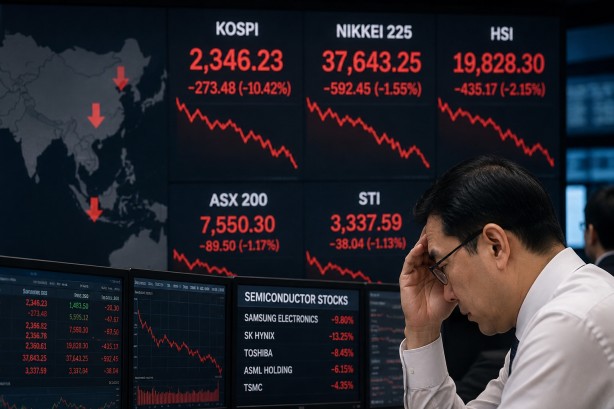
Asian stock markets experienced a downturn on Tuesday, heavily influenced by significant losses in South Korea. The Kospi index took a steep dive, dropping more than 10%, primarily due to a substantial sell-off in semiconductor stocks. This decline was marked by substantial losses in major companies such as Samsung Electronics and SK Hynix, whose shares fell by approximately 12%. Investor worries about intensifying competition from Chinese AI startups and chipmakers have contributed to concerns about the potential impact on the growth of the global artificial intelligence industry.
In addition to South Korea, most other major Asian markets followed suit with declining figures. Japan’s Nikkei, Taiwan’s Taiex, Hong Kong’s Hang Seng, and China’s Shanghai Composite all ended the day in the red. Despite the overall regional downtrend, Australia’s S&P/ASX 200 managed to buck the trend and close with gains, standing out as the only major index in the region to do so.
Amidst these stock market fluctuations, oil prices also saw a decrease. This drop in oil prices came as tensions between the United States and Iran appeared to ease. The reduction in geopolitical stress has raised hopes for renewed diplomatic discussions, which in turn has alleviated some concerns regarding global energy supplies.
The market movements reflect investor apprehensions over the competitive pressure facing established semiconductor giants from emerging Chinese technology firms. As these Chinese companies make strides in artificial intelligence and chip manufacturing, traditional leaders in the sector are feeling the heat, prompting a reevaluation of their growth prospects amid shifting market dynamics.