
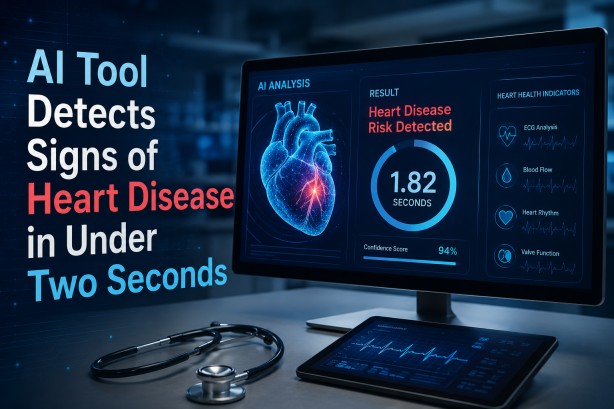
In a significant advancement for cardiac care, doctors have developed an artificial intelligence tool capable of analyzing routine electrocardiograms (ECGs) in under two seconds to identify patients at high risk of heart failure and heart valve disease. This innovative technology, which has been trained using millions of ECGs, can detect patterns that may not be visible to doctors during standard assessments.
A trial involving 67,000 patients in the United States demonstrated the tool’s impressive capabilities, with the AI identifying up to 81% of individuals with heart failure and up to 90% of those with heart valve disease. Given that ECGs are among the most commonly used medical tests globally, with approximately one billion conducted annually, this AI tool has the potential to greatly enhance the efficiency of cardiac diagnostics.
Currently, patients suspected of having heart disease often face long waiting times for echocardiograms, which are more definitive but also more time-consuming. The AI tool is designed not to provide a standalone diagnosis but to assist doctors in prioritizing high-risk patients for echocardiograms and further testing. This prioritization could enable earlier intervention and treatment, potentially improving patient outcomes.
Researchers behind the development of this AI technology are optimistic about its future applications. They suggest that it could be used to analyze ECGs performed for other medical reasons, potentially flagging previously undetected heart conditions. This capability could lead to significant advancements in preventive cardiac care.
Looking ahead, the team is exploring the possibility of creating portable AI-powered ECG devices. These devices could be used by healthcare professionals in various settings, making early detection of heart conditions more accessible and faster than ever before. This development represents a promising step toward integrating advanced technology into routine medical practice, with the potential to save lives through early detection and treatment.