
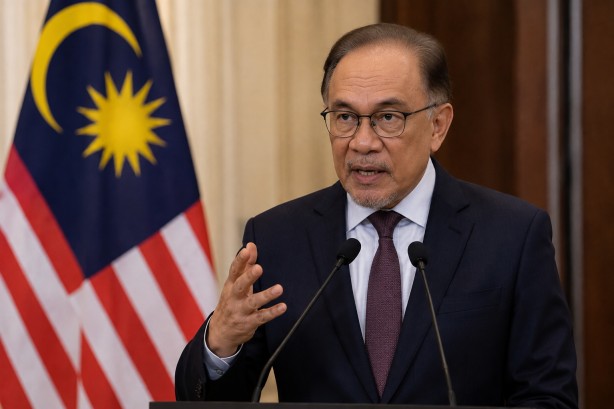
Malaysian Prime Minister Anwar Ibrahim has recently reaffirmed the country’s stance on the One China policy by stating that he views Taiwan as part of China. This declaration has been met with approval from Beijing but has drawn criticism from Taipei. Anwar emphasized that Malaysia remains committed to advocating for a peaceful resolution regarding tensions between the two sides of the Taiwan Strait.
The One China policy in Malaysia has been in effect since 1974, originating when Kuala Lumpur first established diplomatic ties with Beijing. Through this policy, Malaysia acknowledges the People’s Republic of China as the sole legitimate government of China and accepts Beijing’s stance on Taiwan. Nevertheless, Malaysia also underscores the necessity of maintaining peace and stability across the Taiwan Strait.
In response to Anwar’s recent comments, Beijing expressed approval, noting that his views align with its own perspective on Taiwan. Conversely, Taiwan dismissed the remarks, reiterating its position that it is not a part of China and cautioning that statements favoring Beijing’s view could exacerbate concerns about military pressures. Although Malaysia does not maintain formal diplomatic relations with Taiwan, both parties have established substantial economic, cultural, and technological connections through their respective representative offices.
Anwar’s statements have the potential to exert pressure on Malaysia’s relations with Taiwan, particularly among Taiwanese businesses and investors who may be wary of geopolitical risks. Despite this, it is anticipated that Malaysia will continue to navigate its robust relationship with China while still engaging economically with Taiwan. In 2025, trade between Malaysia and Taiwan amounted to US$54.49 billion, making Taiwan one of Malaysia’s key trading partners. Despite diplomatic differences, the significant economic interests shared by both sides may encourage ongoing cooperation.