
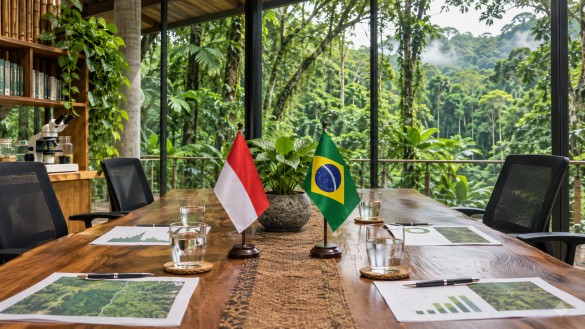
Indonesia and Brazil are discussing a potential partnership to enhance tropical forest conservation efforts and carbon financing strategies. The talks, which occurred during the 31st UN Climate Change Conference (COP31) in Antalya, Türkiye, focused on sustainable forest management, conservation financing, and boosting the livelihoods of communities reliant on forest resources.
Both countries are exploring the exchange of expertise and the development of strategies that align environmental protection with community development. Indonesian officials have shown particular interest in Brazil’s initiatives in the Amazon, which integrate forest conservation with essential services like clean water, solar energy, and internet access, thereby supporting local communities.
An area of significant interest is Brazil’s Amazon Fund, considered by Indonesia as a potential model for bolstering conservation financing through international support and results-based funding mechanisms. Additionally, Brazil’s Ecora carbon credit certification system, which emphasizes the credibility of carbon credits via scientific methods and transparent governance, is under consideration by Indonesia to strengthen its own carbon certification framework.
Indonesia aims to apply these insights to support its Forestry and Other Land Use (FOLU) Net Sink 2030 target and related programs such as social forestry and ecosystem restoration. The collaboration also envisions technical cooperation that involves government agencies, universities, civil society organizations, and development partners, with plans to draft a joint white paper and hold a technical workshop in early 2027.
The proposed partnership seeks to reinforce tropical forest protection, enhance transparency in the carbon market, attract conservation investments, and foster economic development for forest-dependent communities. This cooperation reflects a shared commitment to balancing ecological preservation with sustainable community growth.