
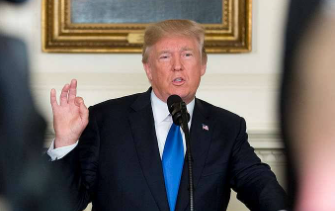
With two words—”Effective immediately”—President Donald Trump has erected a formidable tariff wall around Iran, threatening its trading partners with a 25% levy on goods entering the United States. This executive action, announced on social media, targets the economic lifelines that have sustained the Iranian regime through years of sanctions. By explicitly penalizing major economies like China and India for their ongoing business with Tehran, Trump is attempting to force a total economic blockade. The timing is critical, as the Iranian government faces a historic wave of domestic unrest that threatens to unseat the clerical establishment.
The situation inside Iran is grim. Anti-government protests, sparked by economic hardship, have evolved into a full-blown revolution. The regime has responded with lethal force, killing over 600 citizens and arresting thousands. The evacuation of French diplomats serves as a stark indicator of the deteriorating security environment. Trump’s strategy is to exploit this chaos by cutting off the regime’s external revenue. If Iran’s trading partners bow to the U.S. pressure, the Iranian government will lose the funds it needs to pay its security forces and maintain control over the population.
China has been the most vocal opponent of the new measure. Beijing characterizes the tariffs as an illegal extension of U.S. law, describing it as “long-arm jurisdiction.” The Chinese government has vowed to protect its legitimate rights and interests, setting the stage for a diplomatic and economic standoff. The Chinese argument that “coercion and pressure cannot solve problems” reflects a fundamental disagreement with the Trump administration’s approach. However, the sheer size of the U.S. market gives Trump’s ultimatum significant weight, forcing Beijing to make difficult strategic calculations.
The White House is backing its economic warfare with threats of kinetic action. Press Secretary Karoline Leavitt stated that airstrikes remain a viable option, keeping the Iranian regime on edge. The administration claims to be in receipt of private messages from Tehran that show a government in distress, contradicting the regime’s public displays of strength. Trump has also mentioned his contact with opposition figures, further delegitimizing the current leadership and signaling U.S. support for regime change.
Legal experts note that Trump’s trade policy is currently under review by the Supreme Court, which could eventually limit his power to impose such broad tariffs. However, for the immediate future, the order stands. The 25% tariff is a blunt instrument that forces the world to take a side. In Trump’s view, you are either doing business with the United States or you are doing business with Iran—you cannot do both.