
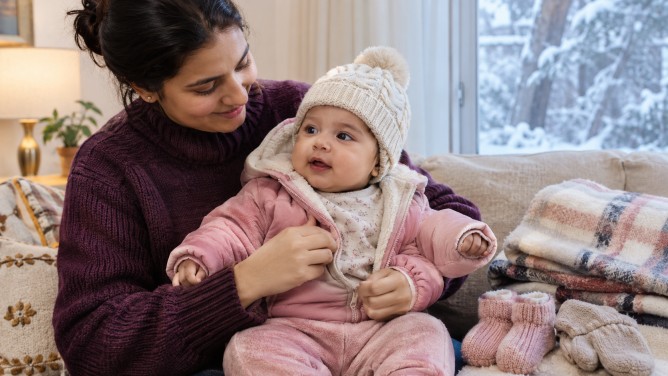
As winter sets in, the cooler temperatures and changing weather conditions bring an increased risk of seasonal infections, particularly for young children. Babies and toddlers are especially vulnerable during this time, as their bodies are still developing and may struggle with sudden temperature changes and common illnesses. To keep your little ones healthy and comfortable, several essential precautions can be taken.
One of the key steps in winter care for babies is dressing them in appropriate layers. While keeping them warm is crucial, excessive clothing can lead to overheating. Parents are advised to use soft, breathable fabrics and dress their children in multiple light layers that can be adjusted based on the temperature. A good rule of thumb is to dress babies in one more layer than an adult would wear comfortably in the same environment. It’s important to check your baby’s chest or back to ensure they feel comfortably warm.
Maintaining good hygiene is another vital practice to prevent infections. Young children frequently encounter germs through toys, shared surfaces, and everyday activities. Encouraging regular handwashing, especially before meals and after playing outdoors, can significantly reduce the spread of common infections. Parents should clean frequently touched toys and household surfaces regularly and teach toddlers simple hygiene habits early on to protect their health throughout the year.
Limiting exposure to people with cold and flu symptoms is also crucial during the winter months. Respiratory infections can become more common as children spend more time indoors. Parents should try to minimize close contact between babies and individuals showing symptoms like coughing or sneezing. Family members and visitors should wash their hands before holding a baby, and it’s advisable to avoid sharing utensils and drinking cups.
Keeping vaccinations up to date is an essential part of protecting children against preventable diseases. Parents should follow the recommended immunization schedule and ensure that routine doses and boosters are administered at the appropriate ages. During regular pediatric visits, carrying the child’s vaccination records and discussing any missed doses or additional vaccines with the pediatrician is recommended. Depending on the child’s age and medical history, a seasonal influenza vaccination may also be advised.
Beyond these measures, maintaining a comfortable indoor temperature, offering adequate fluids, ensuring a nutritious diet, and encouraging indoor activities can further support children’s well-being during winter. By focusing on these consistent health and hygiene practices, parents can help reduce common seasonal health risks and keep their little ones comfortable and protected through the colder months.