
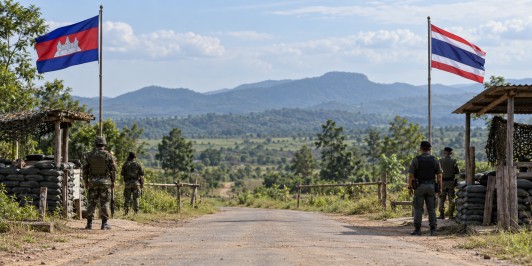
The ceasefire between Cambodia and Thailand, aimed at halting recent hostilities, has not resolved the longstanding border dispute between the two nations. Tensions linger as Cambodia insists that the agreement, effective since December 27, should not be used as a basis to establish new international borders or affect legal ownership of contested territories. This ongoing uncertainty leaves the fate of over 20,000 displaced individuals in limbo, highlighting the fragile nature of the truce.
Cambodia’s Information Minister Neth Pheaktra emphasized that although both countries have agreed to maintain their current military positions, the ceasefire—brokered last December—does not determine final border demarcations. Cambodian authorities have accused Thai forces of strengthening their positions by installing barbed wire, digging trenches, and constructing roads and military facilities, actions that Cambodia argues could alter the status quo and complicate future border negotiations.
The humanitarian impact remains a critical measure of the ceasefire’s success, with the safe return of displaced civilians being a priority for Cambodia. The fighting has forced thousands from their homes, and their ability to return safely is seen as a key indicator of whether both sides are honoring the ceasefire terms.
Thailand, meanwhile, has conducted tours for foreign delegates, ASEAN observers, and international journalists near contentious areas like the O’Smach casino and the Choam crossing. During these visits, Thailand has presented claims related to the use of casino buildings and associated cross-border criminal activities, which Cambodia contests, maintaining that these territories fall within its borders.
As both nations navigate this delicate situation, the international community watches closely, recognizing the ceasefire as a temporary pause rather than a solution to the underlying territorial disagreements. The challenge remains to translate the cessation of hostilities into a lasting peace that addresses both security and humanitarian concerns.